Why Your Business Needs ERP Software
- Centralized Information
ERP systems consolidate data from multiple departments into one central location. This makes it easier to track business performance, analyze data, and make informed decisions. - Improved Efficiency
By automating repetitive tasks and integrating different processes, ERP reduces manual labor, minimizes human errors, and improves operational efficiency. - Real-time Data
With ERP software, businesses can access real-time data for better decision-making and faster response to changing market conditions. - Better Collaboration Across Departments
ERP systems enable seamless communication between departments. For example, the sales team can access inventory data, and the finance team can track real-time revenue, providing a unified view of business operations. Scalability
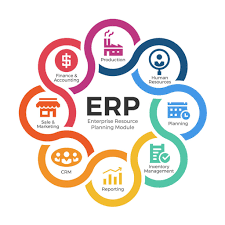
As your business grows, an ERP system can scale with you. You can add new modules, features, and functions as needed, ensuring your software evolves with your business needs.Key Features of ERP Software
Finance and Accounting
Track income, expenses, and profits in real-time.
Manage invoices, payroll, and tax calculations.
Generate financial reports and forecasts.
Inventory Management
Real-time tracking of stock levels.
Automated ordering and stock replenishment.
Integration with suppliers for seamless procurement.
Customer Relationship Management (CRM)
Track customer interactions and sales pipelines.
Automate lead management and follow-ups.
Improve customer service by accessing comprehensive customer data.
Human Resources (HR)
Automate payroll and attendance management.
Streamline recruitment, onboarding, and employee performance tracking.
Manage employee benefits, leaves, and tax calculations.
Supply Chain Management
Manage procurement, order processing, and vendor relationships.
Track shipments and delivery statuses.
Optimize demand forecasting and inventory management.
Sales and Marketing
Automate sales order processing.
Monitor sales performance and revenue generation.
Segment customer data for targeted marketing.
Benefits of Implementing ERP Software
- Cost Savings
By streamlining operations, reducing errors, and improving productivity, ERP software can help businesses save significant costs over time. - Enhanced Decision Making
With real-time data and detailed reports, managers can make informed, data-driven decisions that directly contribute to business growth. - Improved Compliance
ERP systems can help businesses stay compliant with industry regulations by automating tasks like tax calculations and data archiving. - Customer Satisfaction
ERP enhances customer satisfaction by ensuring timely delivery, accurate orders, and effective communication with clients, thanks to integrated CRM modules.